

Introduction
The Forex market is the world’s largest financial market. Currency prices change constantly. These changes happen because of supply, demand, and major world events. A forex economic calendar is a crucial tool for every trader. It lists all scheduled economic announcements that can move currency prices. Trading without checking the calendar is like sailing without a map. It leads to unexpected volatility and losses.
This economic calendar forex tutorial provides a step-by-step guide. It explains how to read the calendar. It shows how to interpret the released data. Traders who master data interpretation and event timing improve their trading decisions. This knowledge helps manage risk. It also helps spot trading opportunities.
What is the Forex Economic Calendar?
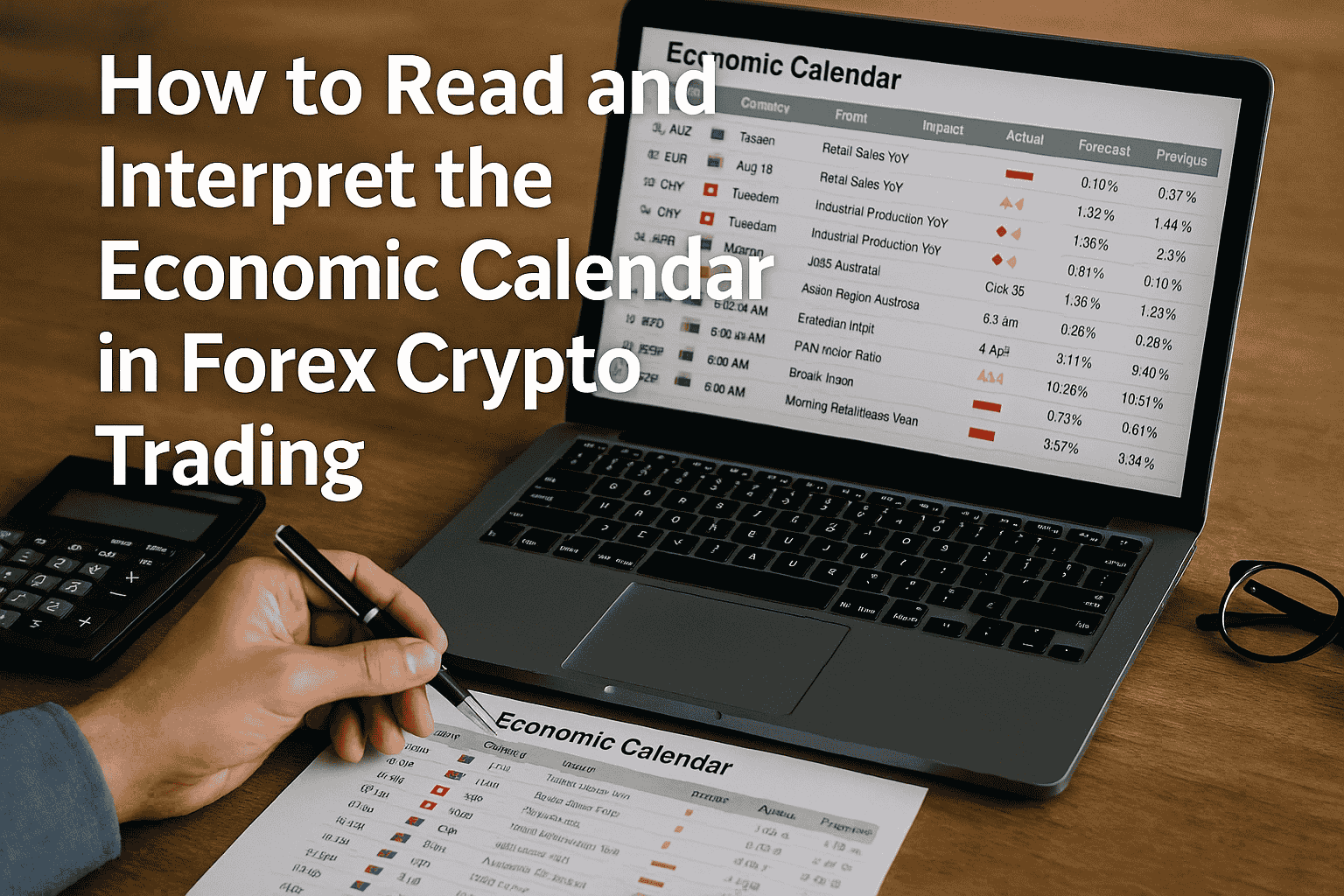
The forex economic calendar is a real-time schedule. It shows economic events from countries worldwide. These events include government reports, central bank decisions, and financial data releases. This information affects a country’s economic health. The health of a country’s economy directly affects the value of its currency.
You can learn more about the calendar’s structure in our Comprehensive Guide to the Forex Economic Calendar at https://tradefxclubb.com/comprehensive-guide-to-the-forex-economic-calendar/.
Step 1: Setting Up Your Calendar View
The first step is setting the calendar to show the information you need.
Adjusting the Time Zone
- Error: Many beginner traders forget to adjust the time zone. They see incorrect release times.
- Fix: Locate the time zone setting on your calendar (usually at the top or bottom). Set it to your local time. This ensures you know the exact minute the news will break. Accurate event timing is critical.
Filtering Events by Currency and Impact
A global calendar shows hundreds of events daily. Most are not relevant to your trades. Filtering is essential.
- Select Currencies: Choose only the currencies you trade. If you trade EUR/USD, filter for Eurozone (EUR) and United States (USD) economic events forex.
- Filter by Impact: Economic calendars use a visual system for impact level.
- Low Impact (Often Yellow): These events rarely cause large price swings. You can generally ignore these for short-term trading.
- Medium Impact (Often Orange): These events sometimes cause volatility. Traders should be aware of them.
- High Impact (Often Red): These are the major economic events forex that create significant market volatility. High-impact events require careful risk management or specific trading strategies. Focus on these.
Step 2: Understanding the Five Key Columns
Every calendar entry has five core pieces of data interpretation to review.
1. Time and Currency
- Time: This is the exact release time in your set local time zone. Event timing dictates when the volatility will hit the market.
- Currency: This is the specific currency the report will affect. For example, a US Non-Farm Payrolls (NFP) report will primarily affect the USD pairs (like EUR/USD, USD/JPY).
2. Event Name (Indicator)
The name tells you what data the report measures. Important indicators fall into a few categories:
| Category | Key Indicators | What It Measures |
| Inflation | Consumer Price Index (CPI), Producer Price Index (PPI) | The rate at which prices for goods and services are rising. |
| Employment | Non-Farm Payrolls (NFP), Unemployment Rate, Jobless Claims | The health of the labor market and job creation. |
| Growth | Gross Domestic Product (GDP), Retail Sales | The overall size and health of the economy. |
| Central Bank | Interest Rate Decision, Monetary Policy Statement | The cost of borrowing money, which is the biggest currency driver. |
Knowing the indicator’s name helps you understand the data interpretation and its importance.
3. Previous Value
The Previous Value is the official result from the last time the report was released. This provides a baseline.
- Use: It helps traders understand the recent trend. If the previous GDP was 2.0% and the current market forecasts is 2.2%, it suggests an improving economy.
4. Forecast or Consensus
The Forecast is also called the Consensus or Estimate. This number represents the average prediction of leading economists and analysts.
- Significance: This is the single most important value before the release. The market has already priced in this expectation. The actual market reaction depends on the difference between the Actual result and this Forecast number.
5. Actual Value
The Actual Value is the official number released by the government agency or central bank at the scheduled time.
- Significance: The market reacts to the difference between the Actual and the Forecast. This is the core of fundamental data interpretation.
Step 3: Data Interpretation and Trading Logic
This step explains how to read the relationship between the three numbers: Previous, Forecast, and Actual. This is the heart of any good economic calendar forex tutorial.
The Surprise Principle
The market does not necessarily react to a “good” or “bad” number in isolation. It reacts to the surprise. A surprise is when the Actual number differs greatly from the Forecast.
- Scenario 1: Positive Surprise (Actual > Forecast)
- Example: Forecast NFP was 180K jobs. The Actual NFP is 250K jobs.
- Interpretation: The economy is performing better than expected. This is bullish for the currency (e.g., USD strengthens). Traders quickly buy the currency.
- Scenario 2: Negative Surprise (Actual < Forecast)
- Example: Forecast GDP was 2.5%. The Actual GDP is 1.5%.
- Interpretation: The economy is weaker than expected. This is bearish for the currency (e.g., currency weakens). Traders quickly sell the currency.
- Scenario 3: Meets Expectation (Actual $\approx$ Forecast)
- Example: Forecast CPI was 0.3%. The Actual CPI is 0.3%.
- Interpretation: The market already priced in this result. The price movement will likely be small or focused on other factors, like the central bank’s accompanying statement.
Step 4: Managing Risk and Event Timing
The correct event timing strategy minimizes risk and maximizes opportunity.
Trading Strategy Options for High-Impact Events
Beginner traders have two main options when a major news event approaches.
- Avoid the Volatility (The Safer Choice):
- Action: Close all trades related to that currency pair 5–10 minutes before the high-impact release.
- Why: The sudden market movement can trigger stop-losses easily. Spreads widen significantly, making trades expensive and risky. Wait 15–30 minutes after the release for the market to calm down and establish a clear direction.
- Trade the Volatility (The Advanced Choice):
- Action: This involves trading the immediate reaction to the news. This is very high risk and is not for beginners.
- Key: Traders need fast execution and a clear view of the data releases and the forecast. The goal is to enter on the sharp move caused by the surprise, using very tight stops.
Risk Management on Volatile Events
- Use Hard Stop-Loss Orders: Never trade a major news event without a hard stop-loss. Price can move hundreds of pips in seconds.
- Reduce Position Size: If you plan to trade during the news, cut your normal position size. This limits potential loss during the extreme volatility.
- Monitor Spreads: Know that your broker’s spread (the cost of the trade) will increase right before and during the announcement. This affects the trade profitability.
Key Economic Events Forex Traders Watch
While many indicators exist, a few cause the most volatility. Beginner traders should focus on mastering the data interpretation for these five.
- Interest Rate Decisions: Announced by Central Banks (Fed, ECB, BoE, etc.). Raising rates strengthens the currency. Lowering rates weakens the currency. These are the biggest market movers.
- Non-Farm Payrolls (NFP): The key US employment report. Released on the first Friday of every month. Strong numbers boost the USD.
- Consumer Price Index (CPI): The main measure of inflation. Higher inflation often signals a potential future interest rate hike, which can strengthen the currency.
- Gross Domestic Product (GDP): The total value of all goods and services produced. It measures the economy’s size. Strong GDP is positive for the currency.
- Retail Sales: Measures total sales of retail goods. High sales show strong consumer spending and a healthy economy.
Conclusion
The forex economic calendar is your essential guide to fundamental analysis. It lets you anticipate volatility. It helps you understand the why behind price movement. Use this economic calendar forex tutorial to make the calendar a daily part of your routine. Always check the event timing and the impact level of upcoming data releases. Compare the Actual result to the Forecast for proper data interpretation. This simple discipline keeps you safe from unexpected market spikes. It also prepares you to take advantage of moves based on strong economic events forex provides. To see all scheduled events right now, check the main page for this category: Forex Economic Calendar.